The Definitive Guide to Cutting-Edge Candidate Screening Strategies for 2026
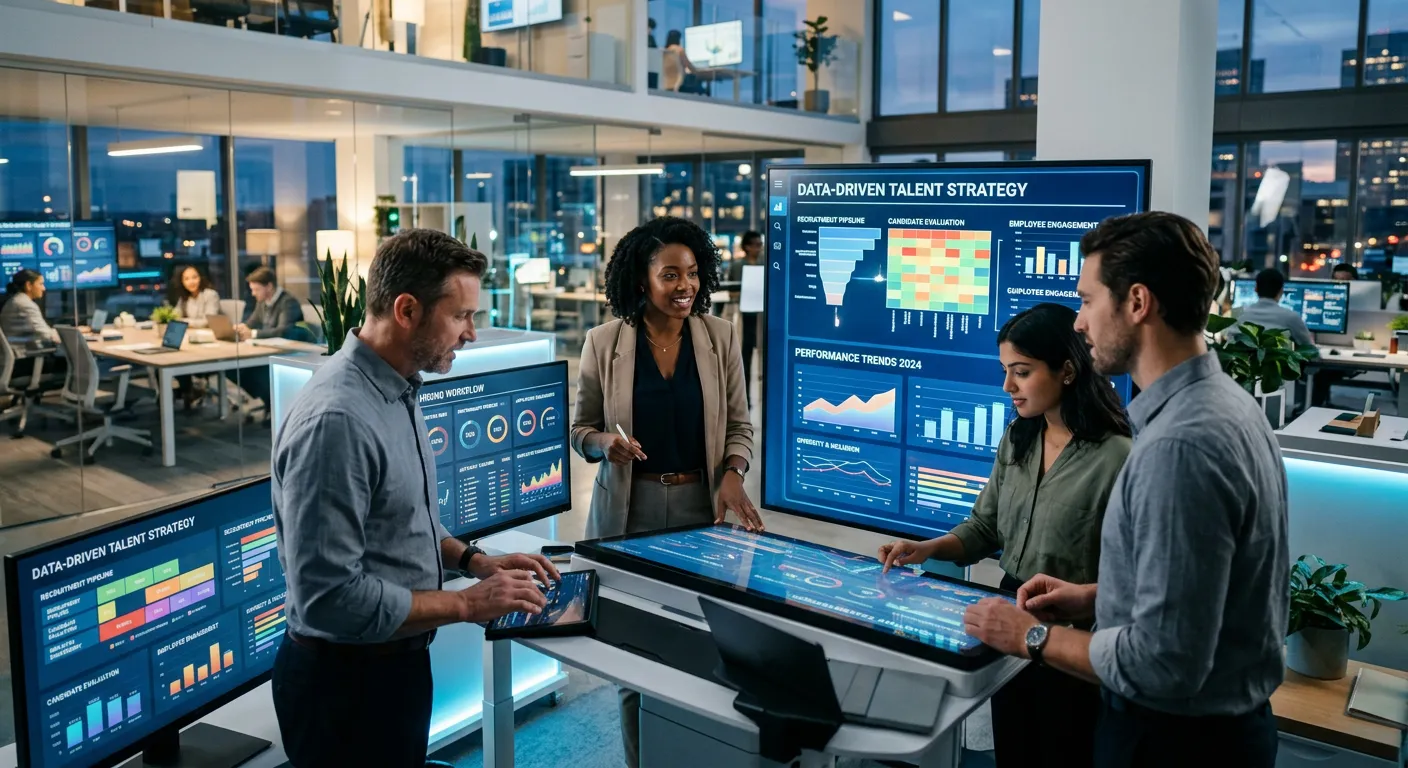
Discover the future of hiring with our comprehensive blueprint for 2026. We reveal the advanced candidate screening strategies for 2026 that will help you find talent faster, reduce hiring bias, and secure the best hire employees for sustainable growth. Stop guessing and start building your elite workforce.
The 2026 Screening Framework: A Multi-Category Overview
The landscape of candidate screening is evolving at breakneck speed. Navigate the core pillars of modern HR solutions with our interactive guide.
Strategic Foundations for Future-Proof Screening
The cornerstone of how to optimize hire employees in 2026 lies in a paradigm shift from reactive filtering to proactive talent forecasting. It's no longer just about filling a vacancy; it's about architecting a resilient talent pipeline that aligns with business agility. This involves defining success profiles based on future skill requirements, not just past experience. Companies must integrate workforce planning data directly into their screening criteria, assessing for adaptability, learning agility, and cultural add, not just cultural fit. This strategic alignment ensures every screening touchpoint evaluates a candidate's potential to drive value in a dynamic market, turning the hiring process into a competitive advantage.
Pro-Tip:
Map your screening stages to specific, measurable competencies. Instead of"good communicator," screen for"ability to distill complex technical data into a client-facing one-pager." This objective clarity is the first step in mastering candidate screening strategies for 2026.
Leveraging AI & Predictive Analytics
Artificial Intelligence is moving from a buzzword to the central nervous system of efficient screening. In 2026, AI's role transcends simple CV parsing. We're looking at predictive analytics that score a candidate's likely job performance and tenure, sentiment analysis of video interviews to gauge soft skills consistently, and sophisticated chatbots that provide a stellar candidate experience while pre-qualifying applicants 24/7. The key is ethical and transparent AI—using technology to augment human decision-making, not replace it. Tools that can reduce unconscious bias by anonymising applications or focusing on skill-based assessments will be non-negotiable for companies seeking the best hire employees.
The Strategic Power of Recruitment Outsourcing
For many businesses, especially when scaling rapidly or entering new markets like specialized warehouse operations or high-end hospitality, building an in-house screening engine for every role is inefficient. This is where expert recruitment outsourcing and staff augmentation become force multipliers. A specialized partner brings market intelligence, pre-vetted talent pools, and scalable screening processes that would take years to develop internally. They act as an extension of your HR team, handling high-volume screening for permanent, contract, and temporary roles, allowing your leaders to focus on strategic integration. This model is detailed in our resource on scalable staff augmentation.
Screening for Retention & Long-Term Value
The most sophisticated screening is futile if the hired candidate leaves within a year. 2026 strategies will deeply integrate retention predictors. This means screening for alignment with company mission, career pathing opportunities, and work-style preferences (remote, hybrid, on-site) from the very first interaction. Incorporating realistic job previews, team-based interviews, and structured questions about past challenges and growth can reveal a candidate's long-term potential. The goal is to find talent that grows with the company. A bad hire is catastrophically costly, a truth explored in our analysis on the true cost of a bad hire.
Core Pillars of Modern Candidate Screening Strategies for 2026
Predictive Performance Analytics
Move beyond gut feeling. Leverage data models that analyse a candidate's digital footprint, assessment results, and interview performance to predict on-the-job success, collaboration style, and likely tenure with over 85% accuracy.
Bias-Disruption Technology
Ensure fair and equitable hiring. Use AI-powered tools to anonymise applications, standardise interview questions, and score responses based solely on competency. This is crucial for accessing the widest possible talent sourcing pool and building diverse, innovative teams.
Skills & Competency Mapping
Ditch the generic job description. Implement dynamic skills frameworks that identify both technical abilities and power skills (like resilience, digital literacy). Screen for demonstrated competency through structured tasks, not just listed experience.
Automated Workflow Orchestration
Streamline your entire hiring funnel. From automated interview scheduling and candidate communication to seamless integration with your HRIS, orchestrated workflows reduce time-to-hire by up to 60% and provide a stellar candidate experience.
Candidate Experience Personalization
Top talent has options. Personalised communication, transparent timelines, and mobile-friendly application processes are no longer nice-to-haves. A positive screening experience directly impacts your offer acceptance rate and employer brand.
Continuous Pipeline Nurturing
Screening doesn't end with a"no." Build talent communities and nurture pools of silver-medalist candidates through targeted content and engagement. This turns your screening process into a strategic talent sourcing asset, drastically reducing future time-to-fill.
Implementing Your 2026 Screening Strategy: A Deep Dive
Phase 1: Audit & Foundation Building
Before implementing any new tool or candidate screening tactic, a thorough audit of your current process is non-negotiable. Map every touchpoint from application to offer. Identify bottlenecks, dropout points, and sources of subjective bias. Calculate your current time-to-hire, cost-per-hire, and quality-of-hire metrics to establish a baseline. Simultaneously, collaborate with department heads to build future-focused competency frameworks for key roles. For instance, if you're looking to hire staff for a restaurant or event, the competencies for a head chef versus a kitchen porter will be worlds apart, yet both are critical. This phase sets the strategic direction for all subsequent investments.
Actionable Step:
Conduct a"Day-in-the-Life" exercise with high-performing current employees in the roles you hire for most. Document the actual skills and behaviors that drive success. Use this as the blueprint for your new screening criteria.
Phase 2: Technology Integration & Upskilling
With a clear strategy, selectively integrate technology. Start with an Applicant Tracking System (ATS) that has robust reporting and can integrate with other tools. Layer in AI-powered sourcing and screening tools that align with your bias-disruption goals. However, technology is useless without human expertise. A critical part of how to optimize hire employees is upskilling your hiring managers and HR team. Train them on structured interviewing techniques, how to interpret new data points (like assessment scores), and the legal/ethical implications of AI in hiring. This human-in-the-loop model ensures technology serves your strategy, not the other way around. For high-volume or specialized needs, this is also the point to evaluate recruitment outsourcing partners who already possess this integrated tech stack, such as those offering comprehensive staffing solutions.
Phase 3: Measurement, Iteration & Scaling
The work doesn't end at implementation. 2026's leading companies treat their hiring process like a product—constantly measured and iteratively improved. Track metrics beyond time-to-fill: look at candidate satisfaction scores (via surveys), hiring manager satisfaction, first-year performance ratings of new hires, and retention rates at the 6 and 12-month marks. Analyse which sources yield the best hire employees and double down on them. Use A/B testing for job ad copy, assessment types, and interview formats. This data-driven approach allows you to refine your candidate screening strategies for 2026 continuously. As you prove success in one department (e.g., using a new video assessment for warehouse operatives), you can scale the effective practices across the organization, creating a cohesive, efficient, and fair global hiring standard.
Key Metric to Watch:
Quality of Hire Source: Correlate the original application source (e.g., job board, employee referral, agency, talent pool) with the new hire's performance review score at 6 months. This tells you exactly where to invest your talent sourcing budget.
Frequently Asked Questions on Candidate Screening Strategies for 2026
Get expert answers to the most pressing questions about modern HR solutions and staff augmentation tactics.
The most significant shift is the move from efficiency-focused to predictive and experiential screening. While speed will always matter, the primary goal in 2026 is using data and structured processes to accurately predict long-term success and fit, while simultaneously treating candidates like valued customers. This means integrating predictive analytics, structured competency assessments, and a hyper-personalised communication flow. It's less about filtering people out quickly and more about accurately identifying and engaging the right people in a way that makes them choose your company.
AI is far from a fad; it's a fundamental tool that is reshaping talent sourcing. When implemented correctly—with human oversight and ethical guidelines—AI can dramatically improve quality of hire. It does this by: 1) Sourcing candidates from non-traditional places based on skills, 2) Reducing unconscious bias in initial screening, 3) Freeing up recruiters' time from administrative tasks to focus on human connection, and 4) Providing data-driven insights on candidate fit. The key is to use AI as an augmentation tool, not a replacement for human judgment, especially in final-stage interviews and culture assessment.
Recruitment outsourcing is a powerful strategic lever in several scenarios: when entering a new market or industry (e.g., needing specialist forklift operators), during periods of rapid, high-volume growth, for hard-to-fill niche roles, or when you lack the internal expertise or technology to screen effectively. It's also ideal for managing fluctuating demand, such as temporary events staffing. A partner like Team Staffing brings immediate scale, expertise, and often more cost-effective screening processes, turning a fixed cost into a variable, outcome-driven investment.
ROI should be tracked across four key dimensions: 1) Efficiency: Reduced time-to-hire and cost-per-hire. 2) Quality: Improved first-year performance ratings and reduced early turnover (attrition in the first 12 months). 3) Experience: Higher candidate and hiring manager satisfaction scores. 4) Strategic: Better diversity metrics and pipeline health. Start by calculating your current baseline in these areas. After implementing new candidate screening strategies for 2026, track the delta. For example, if a new assessment tool reduces early turnover by 15%, the savings in recruitment, onboarding, and lost productivity can be substantial, directly justifying the investment.
Absolutely, but their form and function are evolving. The unstructured, conversational interview is becoming obsolete. In its place, structured competency-based interviews are critical. Technology handles the early-stage filtering, allowing human interviewers to focus on what they do best: assessing nuanced soft skills, cultural add, motivation, and complex problem-solving in real-time. Interviews will increasingly be supplemented by work samples, role-playing scenarios, and panel interviews designed to minimize individual bias. The human connection in the final stage is irreplaceable for assessing mutual fit and selling the candidate on the role, which is a key part of how to optimize hire employees for retention.
Ready to Transform Your Hiring with Elite Candidate Screening Strategies for 2026?
Stop struggling with outdated hiring processes. Implement the advanced candidate screening strategies for 2026 that will let you consistently find talent, secure the best hire employees, and build a workforce ready for the future. Whether you need strategic HR solutions, expert recruitment outsourcing, or flexible staff augmentation, the journey starts with a single step.
Need immediate support? Leverage our 24/7 helpline service for expert guidance on your hiring challenges.
© 2026 Team Staffing. All rights reserved. The future of hiring is here.